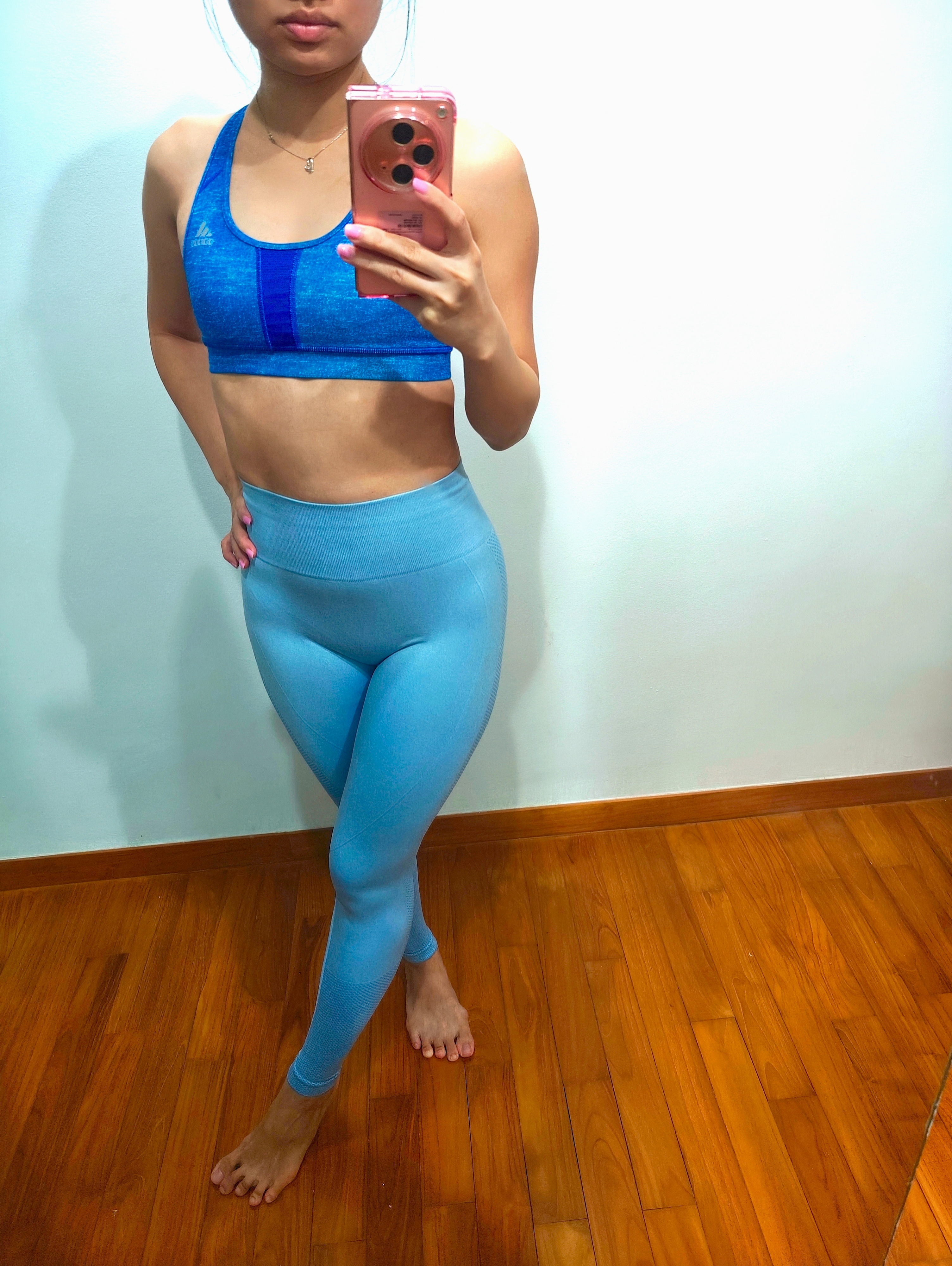
Most fitness advice wasn’t built for me. It assumes long evenings, open weekends, and a body that fits every machine. Motivation is a trap—it spikes with your mood and crashes with stress. Willpower runs out by noon, especially when you’re managing work, family, and the pressure to put everyone else first. If you’re waiting to “feel like it,” you’ve already lost. As someone building a fitness journey as a Fit Petite Asian, those hurdles are real: the guilt of taking time for yourself, the gym that wasn’t designed for your frame, the cultural voice saying your body doesn’t deserve attention.
What actually works isn’t motivation. It’s behavioural design: structuring your environment and habits so fitness happens automatically—not because you’re suddenly more disciplined, but because you’ve engineered the friction away.
When three things line up—who you are, where you move, and what actually fits into your day—fitness stops being a willpower problem and becomes a natural part of how you live.

1. Designing Habits So Fitness Happens Without Willpower
Behavioural scientists like BJ Fogg at Stanford and James Clear have shown that motivation does not come first. Action does.
You don’t wait to feel motivated and then exercise; you make exercise easy enough that you do it, and then motivation follows. But here’s the part that matters for you: for a petite Asian woman carrying work stress, family responsibilities, and the anxiety of being visibly out of place in a crowded gym, the friction is already doubled. You’re not lacking willpower; you’re working against an environment and a schedule designed for someone else. The real solution is not trying harder. It’s engineering your setup so the right behaviour is also the easiest one. That means designing your routine so it fits tightly around the life you already have, using 10–20 minute blocks you can repeat even on your most exhausting days—not because you suddenly feel like it, but because you’ve removed the obstacles that make starting feel impossible.
Stack Tiny Habits Onto What You Already Do
Your brain remembers habits best when they are linked to routines you already do on autopilot. You don’t need a new life; you need new add-ons. Use this simple formula around your existing day: “After I [thing I already do], I will [new habit].” Morning coffee, school drop-off, lunch break, post-dinner cleanup—these are all anchors you already have.
Here are two examples that work with a packed schedule:
– After I start my morning coffee, I will do 5 minutes of mobility or light stretching.
– After I microwave my lunch, I will do 5 minutes of bodyweight squats or wall push-ups.
The habit must fit your real life today, not an imagined quieter future that never arrives.
Lower the Barrier to Action

The less friction between you and starting, the more likely you’ll actually do it. Pack your gym bag the night before and place it directly in front of your door — you cannot miss it. Set up a dedicated, clutter-free corner at home for workouts so there’s zero setup time when you want to stretch or train.
“Design your workouts to be small and easy enough that even your tired, end-of-day self can still say yes.”
BJ Fogg, Behavioural Scientist, Stanford University
2. Balancing Fitness With Work, Family, and Cultural Expectations
Fitness culture often celebrates training six days a week, strict diets, and guilt over any missed session. That might work for someone whose only responsibility is themselves. It does not work for anyone juggling work, family obligations, and the pressure to put others’ needs ahead of your own.
You may hear a voice—your own or someone else’s—saying that time for yourself is selfish, or that your body doesn’t deserve attention until everyone else is taken care of. That belief quietly kills consistency. Taking care of your body is not a luxury; it is maintenance that lets you keep showing up for everyone else without burning out. A routine that fits your energy, your work, and your family rhythm is what will last.
Everyday Movement Still Counts
Formal workouts are only one way your body moves. Walking to the MRT or bus, taking stairs instead of lifts, carrying groceries or kids, stretching your back while you wait for water to boil—these all protect your health. They also remind you that you are allowed to do something for your body, even on days when there’s no “proper” workout.
On a packed day, a 15–20 minute session is enough. A short walk after dinner is enough. Ten minutes of mobility before bed is enough. A sustainable routine bends with school events, late meetings, and family emergencies instead of breaking every time life gets busy. This is not lowering your standards; this is how long-term change fits into a full life.
As a petite Asian woman facing twice the friction to start our fitness journey to gain muscles, we need specific fitness advice, guides and tips made for us — not generic plans built for someone else. That’s exactly what you’ll find here: petite Asian women fitness tips and guides designed around our bodies, our schedules, and the cultural context we navigate.
Build Around Your Real Week, Not an Imagined One
Look honestly at your week — not the ideal version of it. If evenings are exhausting, schedule mornings. If lunch is your only free window, use it. Three short focused sessions a week, built around what your schedule actually allows, will always beat a perfect plan you never follow.
3. Feeling Out of Place in the Gym — and What to Do Instead
Walking into a gym can feel like stepping onto someone else’s turf: loud music, unfamiliar machines, and a culture that might not look or move like you. If you already feel pressure from family, colleagues, or culture to be modest, not take up space, or not “waste time” on yourself, that environment can feel doubly uncomfortable.
There is nothing wrong with you for feeling anxious or out of place there. Confidence is not something you wait to feel before you go; it’s something that slowly builds as you take small, planned steps in spaces that feel safe enough. Who you are, where you move, and what you do there should feel like they belong together. If a space constantly clashes with who you are, it will drain you.
Start Where You Feel Safe and in Control
Start with simple home workouts—squats, push-ups, glute workouts, lunges, planks—until they feel easy and familiar. Then gradually introduce the gym: visit during quiet hours to observe, do a short workout in a quiet corner, add one familiar machine, and finally move to light dumbbells in the free weight area. This step-by-step exposure builds real skill and shrinks anxiety, so confidence appears naturally from repeated small wins. If you’re struggling to see results, read my guide on why petite women struggle to grow glutes.
Learn the Movements Before You Step Into the Room

Gym fear often comes from not wanting to look clueless. Before you go, watch quick videos of the exercises and machines you’ll use, practice the movements at home, and walk in with a simple plan in your notes app.
At the gym, ask staff to show you how a machine works or to check your setup—it’s their job and draws less attention than guessing alone. Most people are focused on their own workout, not on you.
The Attention You Fear Is Smaller Than It Feels
Most people at the gym are too focused on themselves to notice you — the attention you fear is far smaller than it feels.
The Gym Is a Tool — Not a Test

Try shifting how you think about the gym. It’s not a stage, and you’re not being judged. It’s a space with equipment that your body can use to get stronger. You’re there for a practical reason — to move in a way that supports your health, your energy, and your future. That’s it. The gym works best when it feels like a comfortable part of your routine, not a place you have to psyche yourself up for.
Go in with one simple question: “What does my body need today?” Answer it honestly. Do that. Leave. Over time, those quiet, consistent choices add up to something real — a fitness life that actually belongs to you.
4. Gym Equipment Ergonomics — The Hidden Struggle for Petite Women

Most gyms and equipment are designed for taller, heavier bodies. Benches are too high for your feet to touch, handles land above your shoulders, barbells feel long and awkward. When the equipment doesn’t fit your frame, your joints work around the setup instead of the setup supporting your joints. The physical friction is immediate—but the real cost is the mental friction to even show up. When the space already works against you, the friction to start is twice as high as it is for everyone else. You’re not missing confidence or discipline; you’re working against a space not built with your body in mind.
You cannot change your height or limb length, and you don’t need to. Instead, change how the space meets your body. Small, practical adjustments can turn an uncomfortable gym into a place where your form, joints, and confidence are protected.

Many machines are built for taller bodies; quick fix: lower the seat, bring pads to your joints (handles at mid-chest, thigh pad snug, knees at about 90°) before you start.
Lat pulldown: If the thigh pad sits above your lap, stack a folded towel under your thighs to anchor yourself. Grip slightly narrower than default — a wider grip on a long bar pulls your shoulders into a shrug before the movement even starts.
Leg press: Place your feet higher on the plate to reduce knee strain and better engage your glutes. A low foot position on a standard plate forces your knees past your toes, which is harder to control on a shorter frame.
If a machine feels awkward or strains your joints, your brain will naturally start avoiding it — physical discomfort is one of the fastest ways to kill motivation.
Putting It All Together
Lasting fitness for anyone isn’t a smaller copy of a plan made for someone else. It’s something built around three things working together: who you are — your body, your energy, your confidence, your real daily life; where you work out — a space, schedule, and equipment setup that actually fits you; and what you do each day — your habits, your movement, your rest, and the small choices that add up over time.
When one of those three is off, everything feels harder than it needs to be. When all three line up, fitness stops being a struggle and becomes part of who you already are. You don’t need to become a different person. You need a plan that fits the person you are — right now.
References
- Fogg, B.J. (2019). Tiny Habits: The Small Changes That Change Everything. Houghton Mifflin Harcourt.
- Clear, J. (2018). Atomic Habits: An Easy & Proven Way to Build Good Habits & Break Bad Ones. Avery.
- Lally, P., van Jaarsveld, C. H. M., Potts, H. W. W., & Wardle, J. (2010). How are habits formed: Modelling habit formation in the real world. European Journal of Social Psychology, 40(6), 998–1009.
Leave a Reply