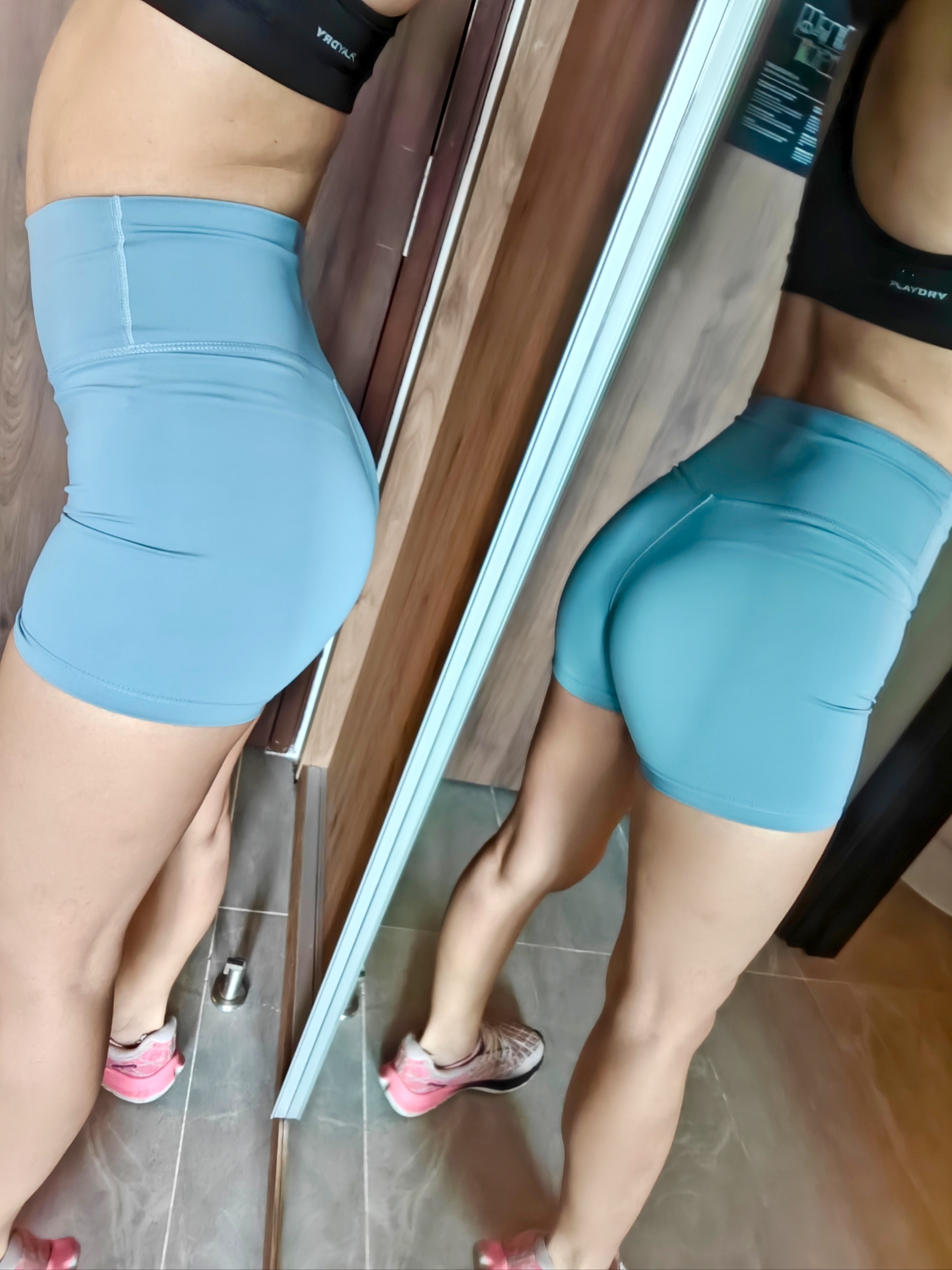
Why Petite Women Struggle to Grow Glutes (And How to Fix It)
If you’ve been doing squats, hip thrusts, and every glute workout you can find on Instagram for months with barely any change, you’re definitely not alone. As a 5’1″ petite woman on a journey to build muscle, I’ve felt this same frustration and confusion, too. Visit my homepage to learn more about me and my fitness journey, or keep reading for honest guidance on why glute growth and efforts to build curves can be slower for petite frames—and what you can realistically do about it.

1. Petite Women May Have Less Muscle Mass to Start With
Because petite women are generally smaller overall, you often start with less total muscle mass in the lower body. That doesn’t mean you can’t build strong, round glutes—it just means your baseline is different.
Why it’s frustrating: Your taller friends’ glutes seem to “pop” faster, and early progress on a petite frame can be subtle.
What to do:
- Think in 6–12 month phases, not weeks.
- Track progress photos and measurements every 4–6 weeks.
- Celebrate strength gains—they often come before visible changes.
2. Not Eating Enough Calories or Protein to Support Muscle Growth
Building muscle requires fuel. If you’re under-eating, your body won’t have enough energy or protein to add new muscle, even with solid workouts.
Why it’s frustrating: You feel like you’re doing everything right in the gym but seeing minimal growth, especially if you hesitate to eat more for fear of gaining fat.
What to do:
- Eat regularly. Aim for 2–3 balanced meals and 1–2 snacks daily.
- Prioritize protein at each meal—eggs, yogurt, tofu, chicken, fish, or tempeh.
- Add easy calories around workouts—yogurt with fruit, toast with peanut butter, or a smoothie.
- Watch your energy levels. Constant fatigue can signal under-fueling; consult a dietitian if unsure.

3. No Progressive Overload — Just Repeating the Same Workouts
Doing the same squats, hip thrusts, and kickbacks with the same weight week after week will stop challenging your muscles. Your body adapts, then plateaus. Learn more about progressive overload for petite women to keep making progress.
Why it’s frustrating: You’re showing up and leaving exhausted, but without gradually increasing the challenge, progress stalls.
What to do:
- Track your lifts on your phone with exercises, sets, reps, and weights.
- Increase one variable at a time—add 2–5 pounds, 1–2 reps, or one extra set.
- Use a rep range like 8–12 reps; increase weight when you hit 12 comfortably.
- Focus on form and tempo—slowing the lowering phase counts as progressive overload.
4. Too Much Cardio Can Interfere With Recovery
Cardio is great for heart health, but long or very frequent sessions can hamper recovery from heavy lower-body training, especially if you’re not eating enough to support both.
Why it’s frustrating: You feel pressured to do lots of cardio to stay “lean,” leaving you torn between glute growth and maintaining your current shape.
What to do:
- Keep some cardio if you enjoy it—you don’t need to cut it out.
- Try 2–3 moderate sessions per week instead of daily high-intensity intervals.
- Separate intense cardio from heavy leg days when possible for better recovery.
- Fuel for both. Higher cardio volume requires better nutrition.

5. Not Training the Entire Glute With Varied Movement Patterns
The glutes have three main parts: gluteus maximus (the bulk), medius, and minimus (hip stability and side shape). Relying only on squats or only on kickbacks leaves parts under-trained.
Why it’s frustrating: You feel the burn during workouts but don’t see the roundness you want, or your knees cave in during squats—a sign some glute muscles aren’t working properly.
What to do:
- Gluteus maximus (hip extension): Hip thrusts, glute bridges, Romanian deadlifts, step-ups.
- Gluteus medius/minimus (abduction & stability): Side-lying leg raises, lateral band walks, single-leg RDLs, curtsy lunges.
- Mix movement patterns—blend bilateral and unilateral exercises.
- Do 2–3 glute-focused lower-body days per week with rest days between.
6. Expecting Results Too Quickly
Social media shows dramatic 8-week transformations, but those aren’t realistic, especially for natural petite lifters. Real muscle growth is slow and steady.
Why it’s frustrating: When you expect big changes in a month or two, normal progress feels like failure, leading you to program-hop or try extreme approaches.
What to do:
- Think like an athlete. Focus on performance goals like hitting a hip thrust weight or mastering a new exercise.
- Commit for 6 months, not 30 days.
- Track subtle wins: Jeans fitting better, improved posture, deeper squats, less knee pain.

7. Comparing Progress to Social Media Images
Most glute photos online are taken in perfect lighting, with strategic poses, angles, and sometimes editing. Comparing your everyday body to curated images makes real progress feel invisible.
Why it’s frustrating: You’re making solid progress but feel “behind” because your glutes don’t match fitness influencers’ from every angle.
What to do:
- Curate your feed. Follow accounts showing diverse bodies, realistic progress, and education.
- Compare you to you. Use your own photos, measurements, and records as your benchmark.
- Remember angles matter. How you stand, flex, or tilt your hips dramatically changes how glutes look in a photo.
- Value how you feel. Strength, confidence, and comfort matter as much as visual changes.
Conclusion
The biggest mistake petite women make is assuming they’re genetically incapable of building curves. The truth is, most simply need more time, better nutrition, and a structured training plan to build and grow stronger glute muscles.
🏋️ What Actually Works For Petite Women
- Protein with every meal. Prioritise a quality protein source at breakfast, lunch, and dinner to give your muscles what they need to grow.
- Train glutes 2–3 times a week. Rotate between hip thrusts, hinges, and squat patterns so every part of the glute gets targeted.
- Make each session slightly harder. Nudge up the weight, squeeze out an extra rep, or add one more set — small steps compound into big gains.
- Think in a 6–12 month window. Meaningful glute development takes sustained effort — commit to the process before judging the outcome.
- Log every session. Recording exercises, weights, and reps keeps you accountable and shows you exactly where to push next.
- Protect your sleep and rest days. Muscle is built during recovery — shortchanging either slows the gains no matter how hard you train.
Leave a Reply